Last updated 2025-08-18
TL;DR
Colorado does not license digital court reporters. Your real cost is AAERT certification plus first-year gear and training, roughly $1,500 to $3,000. The CER exam runs $350 for members and $450 for non-members. You will spend more on a recording kit, backup recorder, and practice depositions than on paperwork. Plan on 3 to 6 months from zero to first paying job.
do you need a license for digital court reporter in colorado?
No. Colorado has no state license for digital court reporters, electronic reporters, or deposition technologists. The state does not issue the credential and does not require one to record depositions or legal proceedings here.
The Colorado Revised Statutes regulate stenographic court reporters inside the judicial branch (C.R.S. 13-3-101 through 13-3-111), but those provisions cover official shorthand reporters in state courts [1]. Digital recording inside Colorado courtrooms is a separate category, controlled by each district's chief judge under judicial administrative orders. Outside the courtroom, in depositions and private proceedings, no Colorado law requires a license of any kind for a digital reporter.
What agencies and law firms actually want is the AAERT Certified Electronic Reporter (CER) credential. AAERT, the American Association of Electronic Reporters and Transcribers, is the national body that sets digital reporting standards. The CER is the working credential for digital reporters in Colorado and nearly every other state without its own digital license. Exam domains and fees are on the AAERT certification page [2].
Colorado is an AAERT state. You do not wait on a board. You register for the CER exam and buy your gear.
how much does digital court reporter cost in colorado?
The honest first-year total for someone starting from zero in Colorado is $1,500 to $3,000, and most of that lives under gear and training, not licensing.
AAERT CER exam fees are $350 for members and $450 for non-members [2]. Membership costs $200 a year, which drops the exam price and opens the digital reporting resource library. The math often favors joining: $200 membership plus the $350 member exam equals $550, against $450 as a non-member with no membership access. Practical exam retakes run $150 per section.
Training is the wildest variable. Colorado has no mandatory pre-licensing coursework. Self-directed CER prep costs anywhere from zero (free AAERT study materials and public legal procedure resources) to $1,200 or more for a structured online digital reporting course. Several online programs bundle software tutorials with legal procedure instruction and charge $800 to $1,200. If you already have transcription or paralegal experience, your training expense could be the CER study guide and a weekend of focused work.
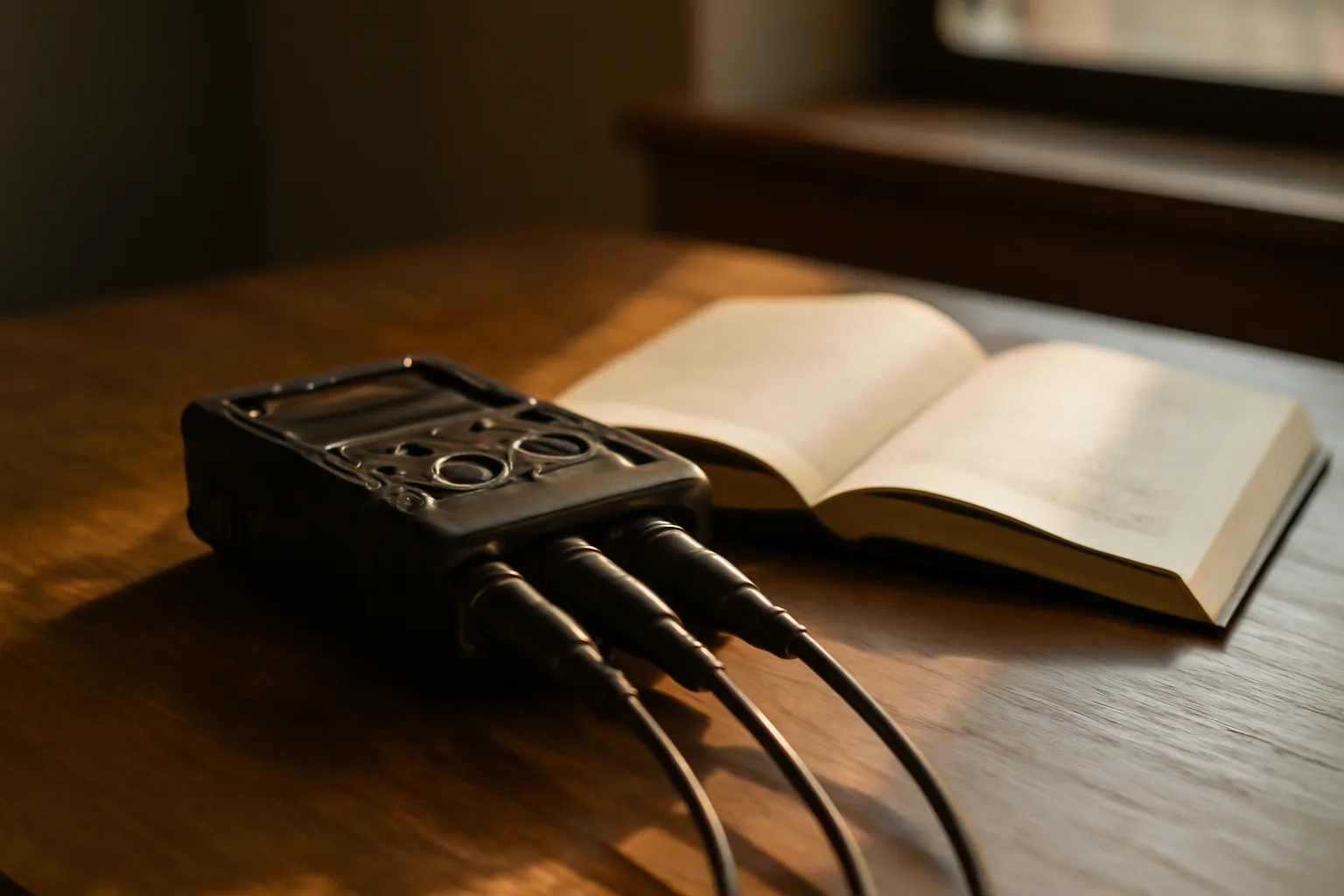
Gear is the non-negotiable piece. You need a professional 4-channel digital recorder with individual channel control and time-stamped audio. Industry-standard setups from Marantz or Fostex run $400 to $700 new. A backup recorder (required by AAERT's code of ethics and every serious client) adds $200 to $400. Microphones, XLR cables, a hard travel case, headphones, and foot pedal software push the full hardware bill to roughly $800 to $1,400. Buying used from other reporters saves several hundred dollars. Do not start with a single consumer-grade recorder.
One tool worth budgeting for early is the Digital CSR Path Kit. At $199 one-time, it is a paper-path reference covering the CER application steps, state-specific deposition rules, and sample procedure documents. It replaces guessing with a checklist when Colorado has no state board to call.
what does digital court reporter gear cost in colorado?
Here is the gear real working Colorado reporters actually buy, not a conference-room wishlist.
| Item | Low range | High range | Notes |
|---|---|---|---|
| Primary 4-channel recorder (Marantz PMD570 or equivalent) | $400 | $700 | Individual channel gain control per microphone; required by AAERT recording standards |
| Backup recorder (portable, same minimum capability) | $200 | $400 | A Zoom H4n Pro or used Marantz is the common second unit; this is not optional for paying work |
| Microphones (2-4 lavalier or boundary mics) | $100 | $350 | Start with two wired XLR lavaliers for depositions; wireless systems start around $300 |
| XLR cables, adapters, stands, splitters | $60 | $150 | Cable failure ends a job; never show up with one cable |
| Headphones (closed-back monitoring) | $40 | $120 | Something like Sony MDR-7506 for real-time audio verification |
| Foot pedal and transcription software license | $80 | $200 | Basic USB foot pedal runs $30 to $50; starter software like Express Scribe Pro adds $50 to $70 |
| Carrying case or flight case | $50 | $120 | A Pelican-style hard case protects the recorder and mics through Colorado weather and transport shock |
| Total gear | $930 | $2,040 | Realists budget $1,100 to $1,500 to start, replacing items after they fail once |
These are new retail prices. The used market through AAERT member forums and reseller groups trims 25% to 40% off the hardware line items. Tight on capital? Start with the primary recorder, backup, two wired mics, and cables. Skip wireless until you have six months of invoices.
how long does digital court reporter take in colorado?
The shortest realistic window from zero to holding a CER and booking your first Colorado deposition is about three months. Most people land between three and six.
The process splits into three blocks: learning legal procedure, passing the AAERT CER written exam, and passing the practical.
The knowledge exam covers legal terminology, deposition procedures, ethics, and technology requirements. AAERT publishes its exam domains publicly [2]. Someone with prior legal support or transcription work can prepare in two to four weeks and sit for the written test. Someone starting fresh on civil procedure should budget six to eight weeks. AAERT offers the knowledge exam online, so scheduling stays flexible.
The practical is the real gate. You record a live or simulated proceeding, produce an accurate transcript under time constraints, and show command of the recording environment. It demands that you have your gear, know your gear, and execute under pressure. AAERT holds practical sessions at regional sites and during its annual conference. Scheduling can mean waiting a few weeks to a few months for the next slot. The Digital CSR Path Kit includes practice scenario files and a timeline builder for lining up gear practice with exam dates.
Colorado geography matters here. AAERT practical sites are not in Denver every month. You might travel to a regional testing site in another state, which adds $200 to $500 in travel and lost days. Many candidates wait until they have recorded at least five practice depositions before sitting, so they stop freezing during the recording phase.
Total timeline, purchase to certificate: 3 to 6 months if you treat it like a project, or a year if you fit study around a full-time job in bursts.
what are first-year operating costs in colorado beyond the exam?
Passing the CER is the entry ticket, not the finish line. A first-year Colorado digital reporter carries recurring costs that catch newcomers off guard.
AAERT annual membership renewal: $200 [2]. This keeps your CER active and your directory listing live.
Continuing education: AAERT requires 3.0 CEUs every three years for recertification [3]. CEU-eligible courses, webinars, and conference sessions typically run $75 to $400 per credit hour depending on online versus in person. Amortize conservatively and budget $100 a year.
Professional liability insurance: Colorado agencies and large firms increasingly require digital reporters to carry their own errors and omissions coverage. Solo deposition policies start around $300 to $600 a year through providers like Hiscox or biBERK.
Notary public commission: Colorado notaries can swear in deponents in-state under C.R.S. 12-55-101 [4]. Your commission (application fee $15, plus bond, plus stamp, roughly $70 to $120 total for a four-year term, administered by the Secretary of State [5]) makes you more useful than a reporter who cannot swear witnesses. Current fees and steps are on the Colorado Secretary of State notary program page [5].
Software and cloud storage: transcription software updates, cloud backup for audio, and secure delivery tools add $20 to $50 a month.
These recurring costs total roughly $600 to $1,000 a year before you make a single dollar.
what colorado courts actually require versus what agencies require?
This split creates confusion that costs people time and money. Colorado's state court system and the private deposition market run on different rules.
Inside Colorado district and county courts, each judicial district's chief judge sets policy for electronic recording under Chief Justice Directive 05-01 [6]. Some districts permit digital reporters for specific proceeding types. Others require licensed stenographic reporters only. You cannot assume statewide access. Call the district court administrator for the district you plan to work in and ask directly before spending on courthouse-specific gear or training.
Private depositions are where nearly all Colorado digital reporters earn their living. Law firms and agencies in Denver metro, Colorado Springs, and beyond do not ask for a state license. They ask for the CER. Several large national agencies operating here list AAERT CER certification as a minimum vendor requirement. The AAERT online certified reporter directory is often the first place a scheduling coordinator looks when booking a Colorado digital deposition [2].
The Colorado Bar Association does not issue binding reporter credential rules for depositions, but the Colorado Rules of Civil Procedure define deposition officer rules at C.R.C.P. 30(c). An officer can be any person authorized to administer oaths under Colorado law [11]. That rule is what makes your notary commission practically necessary, even though it is not a reporting license.
Focus certification spending on AAERT, not on state license applications that do not exist.
how does digital court reporter cost in colorado compare to stenographic reporter?
People ask this constantly because the choice is not obvious. The Colorado stenographic path runs through the NCRA Registered Professional Reporter (RPR) exam or the Colorado Certified Shorthand Reporter (CSR) designation for official court positions. The CSR is handled through Colorado's Supreme Court certification program [7].
A stenographic education program takes two to four years at a dedicated court reporting school, with tuition from $15,000 to $40,000 at an NCRA-accredited program. The digital path in Colorado costs $1,500 to $3,000 and takes three to six months. Steno theory and speed-building are the time driver that nothing else replaces.
| Path | Startup cost | Time to work | Top-tier access |
|---|---|---|---|
| Digital / AAERT CER | $1,500 to $3,000 | 3 to 6 months | Depositions; no realtime credential |
| Stenographic / CSR or RPR | $15,000 to $40,000 | 2 to 4 years | Realtime and captioning contracts |
Earning ceilings differ after the first few years. Skilled Denver stenographic reporters hold realtime and captioning contracts that digital reporters cannot access, because AAERT does not credential realtime translation. For standard depositions the billing overlaps: Colorado digital reporters bill $40 to $75 an hour plus per-page transcript fees, and stenographic reporters bill in the same range for non-realtime work. The digital path trades a lower entry cost and faster start for a ceiling on the highest-paid niches.
Want inside the courtroom long-term in Colorado? The stenographic route and CSR credential stay the dominant pathway. Want deposition work within six months on a four-figure budget? Digital and AAERT is the direct path.
where do the hidden costs actually hurt colorado beginners?
The costs that surprise new digital reporters in Colorado are not the application fees. They are exam retakes, exam travel, and the first three jobs you lose from being under-prepared on procedure.
AAERT practical retakes: failing one section costs $150 [2]. A full practical retake costs the same as the initial exam. Sit before you have drilled audio level management and transcript timing, and you pay twice.
Travel for the practical: when the testing site is Albuquerque or Minneapolis instead of Denver, you add airfare, hotel, and a lost day. One trip can push $500.
Witness swearing confusion: a Colorado notary commission lets you swear witnesses anywhere in the state under C.R.S. 12-55-109 [8]. Show up to a deposition without a commission because you assumed the CER covered it, and the attorney stops the proceeding. You do not get paid. The commission adds roughly $100 every four years and saves you from dead-booking a deposition.
Audio storage compliance: AAERT's Code of Ethics requires reporters to keep recordings and associated materials for a minimum retention period [9]. Cloud storage or encrypted external drives meeting client data security policies cost $15 to $40 a month, not zero.
A beginner who underestimates these four line items burns an extra $500 to $900 in year one. Plan the full budget, more than the exam fee.
how do you verify your own paper path with no colorado state board?
Colorado's lack of a digital reporter licensing board is a speed advantage and a risk at the same time. In California or Alabama, a board-administered license gives you a single source of truth: an application portal, published fees, a phone number. In Colorado, none of that exists for digital reporting.
You become the person who verifies every requirement. No state employee will tell you the right AAERT exam track, the notary rules that apply to depositions, or which judicial districts allow electronic equipment. If an agency asks for 'Colorado digital reporter certification,' they are misstating what exists. The answer they will accept is your AAERT CER and Colorado notary commission.
This is where a pre-built paper-path reference changes the first six months. The Digital CSR Path Kit ($199 one-time) is built for exactly this: it covers the Colorado notary application steps, AAERT domain outlines, and deposition-oath procedure specific to Colorado's notary law, so you are not piecing together state statutes, AAERT handbooks, and court rules across six different websites. It is a reference, not a law firm opinion, and it does not guarantee approval or timelines.
Getting paper right the first time is the difference between working in three months and chasing corrections for six.
what income does digital court reporter cost in colorado buy you access to?
After the $1,500 to $3,000 spend, what does the Colorado deposition market pay? National deposition rate data and Colorado reporter reports put the range at $40 to $75 an hour for in-person attendance, with per-page transcript rates of $2.50 to $4.75 for standard 10-day turnaround [10]. Expedited 1 to 3 day transcripts command $5.00 to $7.50 a page.
A full-day deposition (6 recorded hours, 180 to 220 transcript pages) billed at $50 an hour plus $3.50 a page grosses roughly $930 to $1,070. Three depositions a month at that level covers your entire first-year startup cost.
Colorado has a deposition-heavy legal market concentrated in Denver, Boulder, Colorado Springs, and Fort Collins. Civil litigation, workers' compensation, and personal injury practices generate steady volume. Reporters who register with multiple national agencies and local firms typically build to 6 to 10 depositions a month within the first year.
The ROI math on the $1,500-to-$3,000 entry cost works if you treat the first 90 days as a paid apprenticeship: taking lower-rate overflow work, proving reliability on turnaround, learning procedure under pressure. After 12 months, agency relationships plus a CER credential put a full-time Colorado digital reporter at $55,000 to $85,000 gross annual revenue before expenses, self-employment tax, and health insurance.
These are observed working-reporter numbers, not guaranteed projections. Your rate depends on your metro area, agency contracts, and turnaround speed.
what are the next steps for a digital court reporter in colorado?
Starting this week in Colorado? Here is the sequence that saves money and time.
Day 1: Go to AAERT.org, download the CER candidate handbook, and read the knowledge exam domains and equipment requirements [2]. Check the practical schedule for the next 90 days. If the next site is far, budget the travel now.
Day 2: Price a primary and backup recorder from B&H, Sweetwater, or a used source like eBay with return protection. Do not buy until you have read the AAERT recording specifications line by line. A wrong recorder is a $400 mistake.
Week 1: Apply for your Colorado notary commission through the Secretary of State's online portal [5]. Processing usually takes 2 to 6 weeks. Start early. The oath step requires in-person delivery to your county clerk or a filing that eats calendar time.
Weeks 1 to 8: Work through structured CER knowledge prep and run recording practice sessions with your gear at the same time. The Digital CSR Path Kit lines up the knowledge domains with hands-on recording drills so they happen together instead of in random order. A checklist-based prep removes the ambiguity of self-directed study when no state board hands you a syllabus.
Months 2 to 3: Sit for the knowledge exam online. Schedule the practical for the earliest session you can reach. Between the knowledge pass and the practical date, record at least five full mock depositions with transcript production timed to AAERT's practical speed requirements.
Months 3 to 6: Practical passed, CER posted, notary commission in hand. Register with national agencies (Esquire, Veritext, Planet Depos, Lexitas) and local Denver and Colorado Springs firms. The first paying job usually books within two to four weeks of an active CER and complete agency profiles.
Total cost: roughly $1,500 to $3,000 depending on gear. Total time: 3 to 6 months of structured work.
Frequently asked questions
does colorado require a state license for digital court reporters?
No. Colorado has no state licensing statute for digital or electronic court reporters. State law addresses stenographic reporters in courtrooms (C.R.S. 13-3-101) but does not create a digital reporter credential. The private deposition market and agencies require AAERT CER certification instead. Inside courtrooms, digital reporting access is controlled by each judicial district's chief judge under Chief Justice Directive 05-01.
what is the total cost to become a digital court reporter in colorado?
Plan $1,500 to $3,000 for the first year. The AAERT CER exam fee is $350 for members and $450 for non-members. Membership costs $200 annually. Professional recording gear (primary recorder, backup, microphones, cables, case) runs $930 to $2,040 new. Training ranges from zero for self-study to $1,200 for structured online courses. Add $600 to $1,000 for recurring first-year costs like notary commission, liability insurance, software, and cloud storage.
how much does the aaert cer exam cost?
AAERT charges $350 for the Certified Electronic Reporter (CER) knowledge and practical exam package for current members. Non-members pay $450. AAERT membership is $200 annually. A practical exam section retake costs $150 per section. A full practical retake matches the initial exam price.
how long does it take to become a working digital court reporter in colorado?
Most people take three to six months from starting study to holding a CER and booking a first deposition. Someone with prior legal or transcription experience can finish knowledge prep in two to four weeks and pass the practical at the first available session. AAERT practical scheduling can add weeks of waiting if a site is not nearby. Travel to out-of-state practical sites adds time and cost.
do i need a notary commission as a colorado digital reporter?
Yes, practically speaking. Colorado depositions require an officer authorized to administer oaths under C.R.C.P. 30(c). A notary commission is not a court reporter license, but it is the credential that lets you swear in witnesses at a deposition. Without it, the attorney can stop the proceeding and you forfeit the booking. A Colorado notary commission runs roughly $70 to $120 for a four-year term through the Secretary of State.
what gear is required for aaert certification?
AAERT requires a professional multi-channel digital recorder with individual channel gain control, time-stamped audio, and the ability to produce unaltered master recordings. Most digital reporters use a Marantz PMD570 or equivalent 4-channel recorder. You also need a backup recorder, external microphones, monitoring headphones, and transcription software with foot pedal control. Single-channel consumer recorders do not meet the standard.
can i work inside colorado courtrooms as a digital reporter?
Sometimes, not always. Electronic recording in Colorado district courts is governed by each judicial district's chief judge under Chief Justice Directive 05-01. Some districts permit digital reporters for specific proceedings. Others require stenographic reporters only. Call the specific district court administrator before spending money on courtroom work. Most Colorado digital reporters work private depositions, not courtrooms.
how much can a digital court reporter earn in colorado?
Colorado digital reporters typically bill $40 to $75 an hour for deposition attendance plus $2.50 to $4.75 per transcript page for standard turnaround. Expedited pages reach $5.00 to $7.50. A full-day deposition grosses roughly $930 to $1,070. Full-time digital reporters earning $55,000 to $85,000 annually after establishing agency relationships represents the observed range in Denver metro and Front Range markets.
is aaert certification accepted by colorado deposition agencies?
Yes. National agencies operating in Colorado (Esquire, Veritext, Planet Depos, Lexitas, and regional Colorado firms) accept and specifically request AAERT CER certification. Most agency vendor portals list the CER as the minimum digital reporter credential. The AAERT online certified reporter directory is a primary sourcing tool for scheduling coordinators.
can i use used recording gear for aaert certification?
Yes, if it meets AAERT's technical specifications for multi-channel recording, individual gain control, and time-stamped output. Used Marantz recorders and Zoom backup units from AAERT member forums or reseller sites cost 25% to 40% less than new retail. Test the unit thoroughly on a timed mock deposition before relying on it for an exam or paid job. You must have both a primary and backup recorder.
what continuing education does aaert require for colorado reporters?
AAERT requires 3.0 continuing education units (CEUs) every three years to maintain CER certification. CEU-eligible courses, webinars, and conference sessions typically cost $75 to $400 per credit hour. AAERT's annual conference provides multiple CEU options in a single event. Colorado reporters budget roughly $100 a year amortized for compliance with the three-year cycle.
does colorado require errors and omissions insurance for digital reporters?
Colorado law does not mandate E&O insurance for deposition reporters. But most national agencies and many Colorado law firms require reporters on their vendor list to carry professional liability coverage. Solo digital reporter E&O policies start around $300 to $600 a year through insurers like Hiscox or biBERK. Treat this as a de facto requirement for agency work.
Sources
- Colorado Revised Statutes 2023, Title 13, Article 3, Part 1: Official Reporters: Colorado's stenographic court reporter regulations under C.R.S. 13-3-101 through 13-3-111 apply to official shorthand reporters in courts, not digital reporters.
- AAERT Certification: Certified Electronic Reporter (CER): AAERT CER exam fees are $350 for members and $450 for non-members; membership costs $200 annually; practical exam retakes cost $150 per section.
- AAERT Recertification and Continuing Education Requirements: AAERT requires 3.0 CEUs every three years for CER recertification.
- Colorado Revised Statutes 2023, Title 12, Article 55: Notaries Public, Part 1: Colorado notaries public are authorized to administer oaths and affirmations in-state under C.R.S. 12-55-101.
- Colorado Secretary of State, Notary Program: Application and Fees: Colorado notary public commission application fee is $15 plus bond and stamp costs, roughly $70-$120 total for a four-year commission.
- Colorado Judicial Branch, Chief Justice Directive 05-01: Electronic Recording in Courtrooms: Electronic recording in Colorado district and county courts is governed by the chief judge of each judicial district under Chief Justice Directive 05-01.
- Colorado Supreme Court, Certified Shorthand Reporter (CSR) Program: The Colorado CSR certification is administered by the state Supreme Court for official shorthand court reporters.
- Colorado Revised Statutes 2023, Title 12, Article 55, Section 109: Authority to Administer Oaths: A Colorado notary public may administer oaths and affirmations anywhere within the state under C.R.S. 12-55-109.
- AAERT Code of Ethics, Retention of Records Provision: AAERT's Code of Ethics requires reporters to maintain recordings and associated materials for a minimum retention period.
- National Court Reporters Association 2023 Rate Survey Summary: Deposition reporter hourly rates range $40 to $75 per hour with per-page transcript fees of $2.50 to $4.75 standard and $5.00 to $7.50 expedited, representing national averages mirroring Colorado deposition market ranges.
- Colorado Rules of Civil Procedure, Rule 30(c): Depositions, Examination and Cross-Examination: C.R.C.P. 30(c) permits any person authorized to administer oaths under Colorado law to serve as a deposition officer.