Last updated 2026-08-18
TL;DR
Connecticut does not license court reporters. A notary commission costs $120 and lasts five years. Self-paced training runs about $199, and equipment costs $500 to $2,000. AAERT certification is optional and adds $200 to $275. Most new digital reporters start taking paid depositions within 2 to 4 months.
Do you need a license to be a digital court reporter in Connecticut?
No. Connecticut does not license court reporters, digital or stenographic. Search the Department of Consumer Protection's list of regulated professions and 'court reporter' isn't there [1]. That means no board exam, no state application fee, and no CEU audit hanging over your head.
What you do need is a notary public commission if you plan to swear in witnesses at depositions, and most digital reporters do. The Connecticut Secretary of State issues notary commissions for $120, good for five years [2]. Without a notary seal, you can't administer an oath, and that kills your ability to cover depositions.
National certifications from the American Association of Electronic Reporters and Transcribers (AAERT), like the Certified Electronic Reporter (CER), are optional. No Connecticut statute or court rule requires them. So the short version: no license, get a notary, treat certification as a nice-to-have.
How much does it cost to become a digital court reporter in Connecticut?
The whole startup bill lands between $500 and $2,500, depending on your gear and how you train. Here's the breakdown.
Training. A self-paced kit like Digital Reporter Path's Digital CSR Path Kit costs $199 and covers procedure, software basics, and job prep [3]. Instructor-led online courses from private schools run $800 to $1,500. Either way you learn legal terminology, deposition procedure, and how to handle exhibits.
Notary commission. $120 to the Secretary of State, plus a notary seal and journal ($30 to $60) [2].
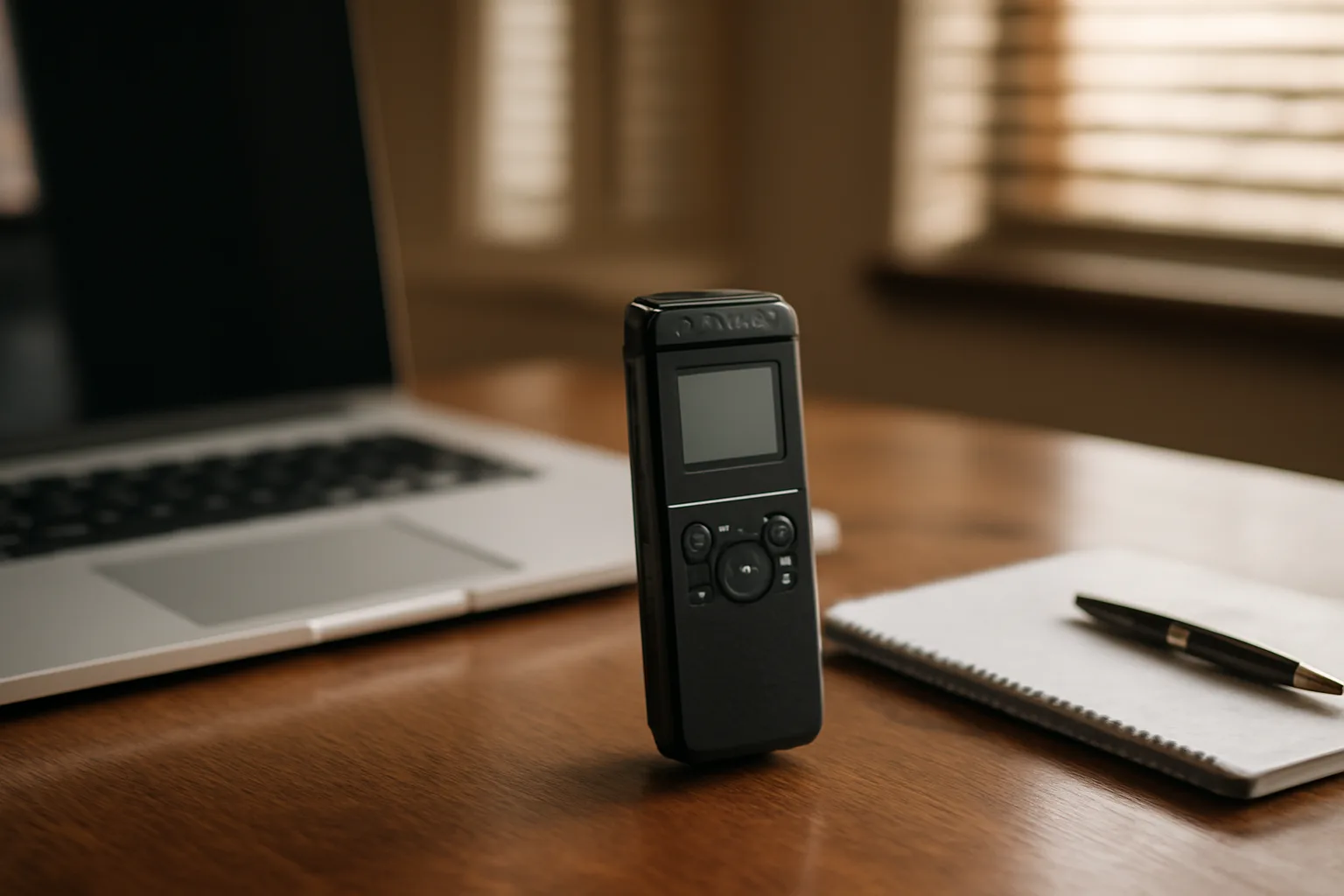
Equipment. At minimum you need a laptop, a good digital audio recorder (a Tascam DR-05X runs about $120), headphones, a transcription foot pedal ($80), and transcription software like the free Express Scribe or a paid option with more features. Budget $500 to $2,000 total, depending on new versus used.
Certification (optional). The AAERT CER exam costs $200 for members and $275 for non-members [4]. Membership is about $150 a year [7].
Miscellaneous. Business registration, insurance, and a website or profile add a few hundred more.
A lean start pencils out like this: $199 training + $120 notary + $500 used gear = $819. Go with new equipment and certification and you top $2,500.
| Item | Low Estimate | High Estimate |
|---|---|---|
| Training | $199 (self-study kit) | $1,500 (formal course) |
| Notary commission & supplies | $120 | $180 |
| Equipment | $500 | $2,000 |
| AAERT CER exam (optional) | $200 | $275 |
| Total | $819 | $2,955 |
That's a real budget. None of the gatekeeper fees you'd hit in a licensed state.
What equipment do you need to start?
A digital reporter's kit is short, but skimp on audio and you'll wreck your accuracy. That's the one place not to save money. Here's the core list.
- A laptop, Windows or Mac, with room for large audio files.
- A digital audio recorder with decent mics and an external mic input. The Tascam DR-05X records WAV files and costs about $120. Some reporters run a Zoom H1n instead.
- Over-ear headphones so you catch every word during transcription.
- A foot pedal (the Infinity IN-USB-2 is about $80) so you can play, pause, and rewind without lifting your hands off the keyboard.
- Transcription software. Express Scribe is free and works with most pedals. For timestamping and speaker labels, paid tools run $30 to $60 a month.
Plenty of new reporters buy a bundle with the pedal, software, and headset for around $200. Add a noise-canceling headset if you'll cover remote depositions over Zoom.
How long does it take to become a digital court reporter in Connecticut?
From zero to your first paid deposition, plan on 2 to 4 months. The pieces run in parallel, which is why it moves fast.
- Notary commission. The Secretary of State processes new applications in about 4 to 6 weeks [5]. Connecticut notaries don't need a surety bond, so it's just the fee and paperwork.
- Training. A self-paced program like the Digital CSR Path Kit takes 2 to 8 weeks at your pace. Instructor-led courses run 8 to 12 weeks.
- AAERT certification. If you sit for the CER, you first meet eligibility (40 hours of formal training or equivalent), then schedule the computer-based test. Scheduling alone can take 2 to 4 weeks on top of study time.
Here's a straight path. Apply for the notary (4 weeks), finish self-study training (4 weeks), and buy your gear during the same window. That's about 8 weeks to market-ready. Add a month for networking and landing gigs and you're right at 3 months. No license board making you wait.
Can you work without AAERT certification in Connecticut?
Yes. Most freelance agencies in Connecticut don't require AAERT certification. They care about reliable equipment, clean accuracy, and whether you hold a notary commission to swear in witnesses.
The Connecticut Judicial Branch doesn't require freelance depositions to be taken by a certified reporter. As of 2025, no statute or court rule mandates AAERT or NCRA credentials for digital reporters taking depositions or transcribing proceedings.
Some national agencies and high-stakes litigation firms do ask for certification in their vendor guidelines. A CER can open those doors and lift your rate. It's optional, and it's a real differentiator when two reporters are otherwise even.
What's the job outlook for digital court reporters in Connecticut?
Court reporters of every type are in demand. The U.S. Bureau of Labor Statistics groups digital and stenographic reporters together. Connecticut court reporters earned a median annual wage of $63,490 in May 2023 [6], and hourly contractors often clear more, especially in the Hartford and Stamford legal markets.
The demand is steady because trials, depositions, and administrative hearings all need a verbatim record. BLS projects 3% growth for the occupation nationally from 2022 to 2032. The stenographer shortage is the real story here: fewer new stenographers are entering the field, and that's pushing firms toward digital. Connecticut's mix of insurance defense, corporate litigation, and remote depositions (common since 2020) gives digital reporters plenty of gaps to fill.
What ongoing costs should you expect as a digital court reporter in Connecticut?
Once you're running, your recurring costs are modest. Most reporters spend $500 to $1,000 a year beyond the initial startup. Here's where it goes.
- Notary renewal. Every 5 years you renew your commission for $60 [2].
- Software subscriptions. $20 to $60 a month for production tools or cloud storage.
- AAERT membership and recertification. If you go the CER route, membership is about $150 a year [7], and recertification every 3 years needs continuing education plus a fee around $150.
- Liability insurance. Errors and omissions coverage runs $300 to $500 a year. Some agencies require it.
- Equipment upkeep. Batteries, cables, and backup drives.
None of it is a surprise if you plan for it. Build the yearly number into your rates and it disappears.
How do you find clients or agencies in Connecticut?
Start with the deposition agencies in Hartford, New Haven, and Stamford. Send a short intro email with your notary info, your equipment list, and a sample transcript. That last item matters more than a resume. National platforms like the AAERT job board and Indeed also list digital reporting gigs.
Local bar associations and LinkedIn groups turn up one-off depositions. Many reporters go straight to solo practitioners and small firms, which move faster than big agencies. A clean website and a short demo of your transcription accuracy do more work than any pitch.
What's the step-by-step plan to launch your digital reporting career in Connecticut?
1. Get your notary commission. File the application and fee with the Secretary of State [2]. 2. Finish a digital reporting training program. A $199 self-paced kit can get you job-ready in weeks (digitalreporterpath.com/start). 3. Buy and test your equipment. Record mock depositions and transcribe them. 4. (Optional) Study for and take the AAERT CER exam. 5. Register your business if needed. Sole proprietorship is the simplest. 6. Market to local agencies. 7. Line up your first deposition. Do one pro bono for a friend's law firm if that's what it takes to get a sample.
That's the whole path. No months of red tape.
How does Connecticut compare to nearby states on licensing and cost?
Connecticut is one of the easiest states to start in because there's no state-specific licensing. Compare that to Alabama, where you need a Certified Court Reporter (CCR) credential through a board exam, or California, which runs a tough exam for CSR certification. In those states the licensing process adds $500 to $1,000 and 6 to 12 months before you can bill a dime.
If you're thinking about relocating or working across state lines, read our guides on digital court reporter cost in Alabama, digital court reporter cost in California, and digital court reporter cost in Florida. The rules swing hard from state to state.
Staying in Connecticut keeps your overhead low and gets you working sooner.
Frequently asked questions
Do you need a license for digital court reporter in Connecticut?
No. Connecticut does not license court reporters. A notary public commission is the only state credential you'll likely need, and only so you can swear in witnesses. The Connecticut Department of Consumer Protection does not list court reporter as a regulated profession.
How much does digital court reporter cost in Connecticut?
Startup costs run about $800 to $2,500. A lean budget covers $199 for self-paced training, $120 for a notary commission, and $500 for used equipment. Formal training, new gear, and optional AAERT certification push the total toward the high end.
How long does digital court reporter take in Connecticut?
Most new reporters are ready in 2 to 4 months. The notary application takes 4 to 6 weeks. Self-paced training can be done in as little as 4 weeks. Scheduling an AAERT exam may add a few weeks if you choose to sit for it.
Is a notary public required for digital court reporters in Connecticut?
You need a notary commission if you plan to administer oaths at depositions, hearings, or other legal proceedings. The application costs $120 and the commission lasts five years.
Can I work in Connecticut without AAERT certification?
Yes. Most agencies and law firms don't require it. Certification can improve your marketability and rate, but it is entirely optional under Connecticut law. No Connecticut statute requires AAERT or NCRA credentials for digital reporters taking depositions.
What equipment do I need to start as a digital court reporter?
A laptop, a quality digital audio recorder, headphones, a foot pedal, and transcription software. A basic setup runs $500 to $700 if you buy used or budget models. Audio quality is the one place not to cut corners.
How much can a new digital reporter earn in Connecticut?
Entry-level digital reporters typically earn $25 to $35 per hour or per deposition page. Experienced reporters in high-demand areas like Hartford and Stamford can reach $50 an hour or more, especially with certification.
Do I need to register a business in Connecticut?
If you operate as a sole proprietor under your own name, no state registration is required. If you use a trade name, you file a trade name certificate with the town clerk. There's no general business license requirement at the state level for court reporters.
Are there continuing education requirements for digital reporters?
Connecticut imposes no CEU mandate. If you hold an AAERT certification, you'll need continuing education to recertify every three years. Otherwise there's no formal obligation from the state.
How do I get my first digital court reporting job in Connecticut?
Reach out to deposition agencies in the major cities, join the AAERT job board, and network with local bar associations. A sample transcript and a clean demo of your equipment help you land gigs before you have a track record.
What training is best for digital court reporting?
Self-paced online kits start around $200 and cover the essentials: legal procedure, audio management, and transcript production. Instructor-led programs cost $800 to $1,500 and may include mentoring. Both paths prepare you for freelance work.
Is digital court reporting legal in Connecticut courts?
Yes. Digital recording and transcription are accepted for depositions and administrative hearings. Official courtroom proceedings are usually handled by court-appointed reporters, but freelance digital reporters cover the large majority of depositions.
Sources
- Connecticut Department of Consumer Protection, License Requirements Index: Court reporter is not listed as a licensed profession in Connecticut.
- Connecticut Secretary of State, Notary Public: New notary public commission fee $120; renewal fee $60; five-year term.
- Digital Reporter Path, Digital CSR Path Kit: Kit price is $199.
- AAERT, Certified Electronic Reporter (CER) Certification: The CER written knowledge exam fee is $200 for AAERT members and $275 for non-members.
- Connecticut Secretary of State, Notary Public FAQs: Notary commission processing time is 4-6 weeks.
- U.S. Bureau of Labor Statistics, Occupational Employment and Wage Statistics, May 2023: Court Reporters and Simultaneous Captioners: Median annual wage for court reporters in Connecticut is $63,490.
- AAERT, Membership: Annual AAERT membership fee approximately $150.